Services
Buy & Sell Pallets in Albuquerque
Whether you need pallets or want to find a home for surplus ones, tell us what you have in mind and we will quote it.
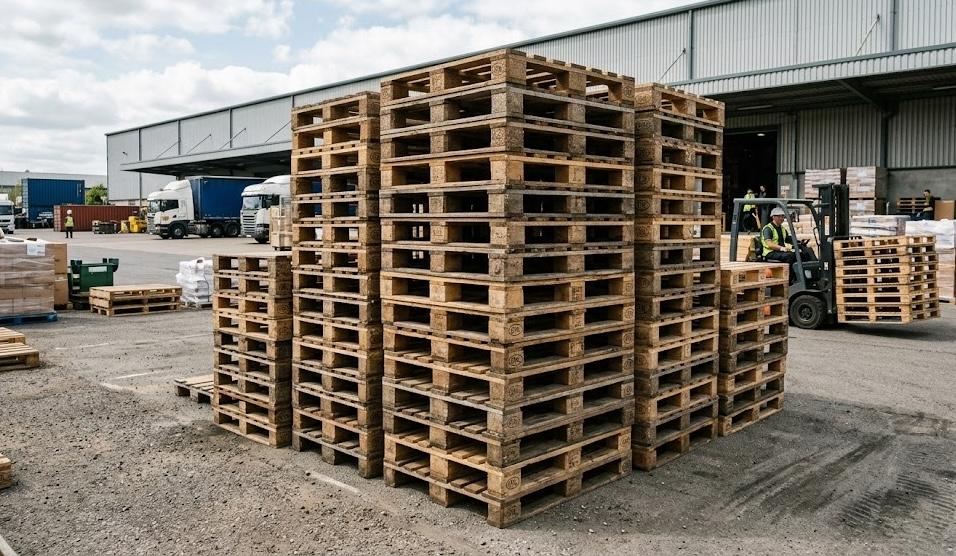
Pricing is by quote, based on your size, grade, and quantity.
Buying Pallets
Find Pallets With Us
Tell us the pallets you need, new or recycled, standard or custom. We follow up with availability and a quote.
If your load allows it, recycled pallets are worth considering. Reusing a pallet avoids building a new one, and many everyday shipments do not need a new pallet. Check the load guidance with us before you decide.
What You Can Request
- Grade A recycled pallets: very good condition, minimal cosmetic wear
- Grade B recycled pallets: functional, with visible wear or repairs
- Grade C recycled pallets: more wear, for lighter or one-way uses
- New pallets: built to standard or custom dimensions
- Heat-treated (HT) pallets: ISPM 15-marked for export, where available
- Oversized pallets: for heavy or non-standard freight, where available
How to Buy, Step by Step
1
Tell Us What You Need
Share the pallet size, grade, quantity, location, and timing, plus any special need like heat treatment or custom dimensions.
2
We Match Your Request
We check what we can supply for you.
3
Receive a Quote
We follow up with pricing, availability, and whether delivery or collection is possible.
4
Confirm With Us
If the quote works for you, you arrange the order with us. Ask how we handle grade checks and any issues.
What Affects a Quote
Pallet pricing moves with availability and the details of each order, so we do not publish prices. Here is what we look at when we quote.
Size & Dimensions
Common sizes such as 48x40 are the easiest to source. Custom dimensions and oversized builds take more material and labor.
Grade & Condition
Better-condition pallets usually cost more than heavily worn ones, and new pallets are a separate category again. The right grade depends on your load.
Quantity & Frequency
The size of the order and how often it repeats can change how we price it. Tell us both when you ask for a quote.
Treatment & Export Needs
Heat treatment to the ISPM 15 standard adds a step, and it can affect both availability and the quote. Say so early if your pallets will be exported.
Location & Delivery
Where the pallets need to go, and whether you can collect them, can change the quote. We will tell you what is possible for your site.
Timing
A tight date can limit what is available and may affect the quote. The more notice you can give, the more options we are likely to have.
Choosing What to Buy
Match the Pallet to the Job
If pallets leave your building and never come back, a sound used pallet may do the job. Paying for a new pallet makes more sense when appearance, exact dimensions, or repeated use matter most.
If you ship abroad, check the current import rules for the destination country first. Many countries require wood packaging that meets ISPM 15, which you can identify by its HT or MB mark.
Whether you need a few pallets or a large load, describe how they will be used. That helps us suggest a suitable option.
Questions to Ask About a Quote
- Is the price per pallet or for the whole load?
- Does the quote include delivery or pickup?
- How do you define the quoted grade?
- What happens if pallets do not match the quote?
- How long does the quote stay open?
- How and when is payment handled?
How to Sell Your Pallets, Step by Step
1
Send Us the Details
Let us know the approximate quantity, sizes, condition, and location of your pallets. Photos help.
2
We Match Your Request
We look at whether we can buy your pallets.
3
We Review
We may ask for more photos or arrange to see the pallets before deciding.
4
Receive an Offer
If the pallets suit us, we make an offer based on condition, quantity, size, and current demand.
5
Arrange the Rest Directly
Collection and payment are agreed between you and us. Confirm both before anything leaves your site.
Selling Pallets
Find a Buyer for Surplus Pallets
If your warehouse, distribution center, or retail location collects used pallets, they may be worth something to us. Selling them keeps usable wood in circulation and clears space on your site.
Whether we will buy your pallets depends on their condition, size, and quantity, and on current demand. Some loads may be better suited to repair or recycling, and we can tell you which applies.
What Makes Pallets Easier to Sell
- Standard sizes such as 48x40, 42x42, and 48x48
- Sound boards, stringers, and blocks, or only minor damage
- Clean pallets with no spills, strong odors, or mold
- Consistent sizes and condition across the load
- Dry, tidy storage in a spot a vehicle can reach
- Enough quantity to justify a trip, which varies
What Shapes an Offer
ConditionReady to reuse, or needs repair
SizeCommon sizes are easier to place
QuantityLoad size and how often it repeats
LocationAccess and distance to your site
Buying & Selling FAQ
Who buys pallets near me?
Pallet buyers in New Mexico are mostly recyclers and resellers, and offers depend on grade, size, quantity and condition. We buy used pallets: one form lets us see your pallets and reply with a quote.
What is the difference between Grade A, B, and C pallets?
Grade A pallets are in very good condition with minimal cosmetic wear. Grade B pallets are functional with visible wear or repairs. Grade C pallets show more wear and suit lighter or one-way uses. Definitions vary, so confirm them with us.
How is a pallet quote priced?
All pricing is by quote. Size, grade, quantity, treatment, location, and timing all play a part, so we do not publish a price list.
Can I return pallets that do not meet my expectations?
Before you agree to an order, ask how we handle pallets that do not match the quoted grade.
How quickly can I get pallets delivered?
Timing depends on what we have available. Put your needed date in the request, and we follow up with what we can do.
What is the minimum quantity I can sell?
We set no minimum for a request. We may only be able to take certain sizes or quantities, and will tell you when we follow up.
Buyer's Guide
Pallet Options at a Glance
We do not publish prices. Use this guide to work out what to ask for, and we can quote the option that fits.
| Pallet Type | Common Use | What Shapes the Quote |
|---|---|---|
| 48x40 Grade A Used | Everyday shipping where appearance matters | Availability of clean, lightly worn pallets |
| 48x40 Grade B Used | Everyday shipping and warehouse moves | Quantity and how much repair is acceptable |
| 48x40 Grade C Used | Lighter loads and one-way shipments | Quantity and the condition you can accept |
| 48x40 New | Uniform loads and repeated handling | Lumber and order size |
| 48x40 New, Heat-Treated | Export shipments requiring ISPM 15 | Treatment and availability |
| 42x42 Used | Drums and square loads | How easily this size can be sourced |
| 48x48 Used | Bulk bags and larger loads | How easily this size can be sourced |
| Custom New | Non-standard products and equipment | Dimensions, materials, and design |
Common uses are general guidance. Check suitability for your load with us.
Planning a Larger Order
Bigger orders take more coordination. These details help us quote accurately and tell you what is realistic.
Give a Realistic Count
Estimate how many pallets you need now and whether more will follow. We can only plan around the numbers we have, so a reasonable estimate is better than none.
Share Your Schedule
If you need pallets in stages, say so. Spreading a large order over several drops may be easier to supply than one load, depending on the load.
Define the Grade in Writing
Grade names vary. Describe what is acceptable for your operation, such as the amount of repair you can live with, and ask for it in the quote.
Sort Out Delivery Early
Describe your dock, forklift access, and storage space. On a large order, the way pallets arrive can matter as much as the pallets themselves.
Ask About Repeat Orders
If this will be a regular need, tell us. We can then say whether a repeat schedule is possible and how that would be quoted.
Agree on Payment Up Front
Payment is agreed with us. Confirm how it works before you commit, particularly on larger orders.
Seller Requirements Checklist
Planning to sell your used pallets to us? These steps make it easier to assess your load and arrange collection.
Keep pallets accessible for loading
Stack pallets at ground level where a truck and forklift can reach them. Describe any height limits, narrow gates, or tight turns in your request.
Separate by size if possible
Keeping 48x40 pallets apart from other sizes makes the load quicker to count and assess. Mixed loads may take longer to review.
Remove non-pallet debris
Clear away stretch wrap, banding, cardboard, and other packaging. A clean stack gives a much better impression of what the pallets are worth.
Disclose any contamination
Pallets exposed to chemical spills or other hazardous material may not be accepted. Tell us what you know before any collection is arranged.
Provide an approximate count
A rough count helps us plan the right vehicle. Count your stacks and multiply by the pallets per stack, and expect a final count at collection.
Know who can approve an offer
If we visit your site, have someone there who can answer questions and accept or decline an offer. That can save a second trip.
Know your pallet history
Tell us if your pallets carried food, chemicals, or export freight. That can affect how they are graded and whether they can be reused.
Reuse Keeps Pallets in Service
A pallet that still works does not need to be replaced. Buying recycled pallets, or selling your used ones to us to reuse, avoids building a new pallet for that trip and makes more use of the wood that has already been cut.