Services
Custom Pallet Manufacturing
When standard pallets do not fit, a custom build might. Share your specifications and we will quote oversized platforms, export crates, and other non-standard builds.
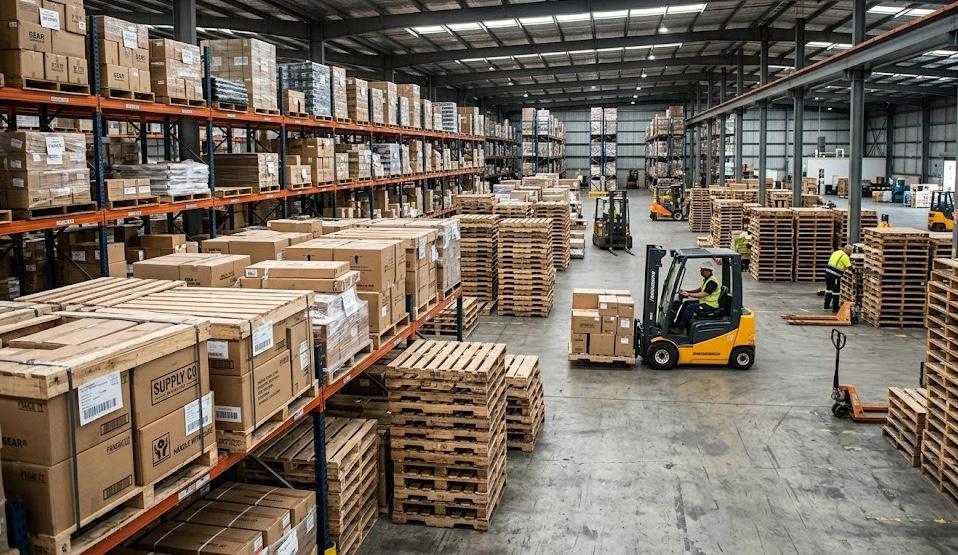
We build and quote custom pallets, crates, and skids.
From Request to Finished Pallet
How a Custom Order Usually Works
You send the requirements, and we take it from there. Most custom jobs then follow steps like these.
01
Your Request
Describe what you are shipping, how heavy it is, where it is going, and how it will be handled. These details shape every design decision that follows.
02
Design & Engineering
We work out a design for your load, dimensions, and handling. Stacking, forklift access, and any special needs are all considered.
03
Material Selection
Lumber species, thickness, and treatment are chosen to suit the application. Options can include hardwood, softwood, heat-treated, and recycled lumber.
04
Prototype & Approval
For a new design, ask for a sample to review. Test it with your products and verify the fit before you commit to a full run.
05
Production Run
Once a design is approved, we build the order. Jigs and templates are commonly used to keep the units consistent.
06
Delivery or Collection
Finished pallets are delivered or collected as agreed with us. Keep your specifications on file to make future orders easier.
What You Can Request
Custom Build Options
Requests can range from a simple size change to engineered packaging. Tell us what you need and we will say what can be made.
Custom-Size Pallets
Non-standard dimensions and configurations, including two-way, four-way, block, stringer, wing, or flush designs.
Heavy-Duty Pallets
Reinforced construction for heavier loads, such as thicker stringers, closer board spacing, or hardwood. Confirm load suitability with us.
Export Crates & Skids
Heat-treated, ISPM 15-marked export packaging, where available. Crates can be designed to protect products in international transit.
Other Packaging
Beyond pallets, you can ask about custom dunnage, blocking, and bracing to secure products during shipping.
Materials to Discuss
Southern Yellow Pine
A common softwood choice for general-purpose pallets.
Oak & Hardwood
Strong and durable, which suits heavy loads, though it weighs more.
Recycled Lumber
Reusing sound lumber avoids cutting new boards. Check that it suits your load.
Heat-Treated Wood
Treated to the ISPM 15 standard of a 56 °C core temperature for 30 minutes. Often needed for export.
Plywood & OSB
Used for deck surfaces that need a smoother, more continuous platform.
Design for Reuse
If reuse matters to you, raise it at the design stage. Ask whether recycled lumber would suit your load, and where we source our wood.
A pallet that is simple to take apart and repair is easier to keep in use. Common sizes and standard parts can make that easier when the pallet is worn.
Common Uses by Industry
Different kinds of freight call for different pallets. These examples may help you describe what you need to us.
Export Shipping
Crates and skids for goods moving overseas, using heat-treated wood marked to ISPM 15 where the destination requires it.
Food & Beverage
Smooth deck boards and heat-treated lumber are common requests. Check your own requirements and discuss them with us.
Manufacturing & Automotive
Heavy-duty pallets for machinery and industrial components, with reinforced construction and dimensions matched to the part.
Instruments & Equipment
Crates with internal bracing for delicate instruments, plus smooth platforms for equipment that must stay level.
Agriculture
Open-deck pallets for airflow and sturdy construction for outdoor use. Discuss moisture and field handling with us.
Electronics & Technology
Custom crating with internal bracing for servers, screens, and other fragile items that need extra protection.
Construction & Building
Oversized platforms for building materials, lumber bundles, and heavy equipment, in extra-wide or extra-long designs.
Retail & E-Commerce
Display-ready pallets, smaller pallets for in-store merchandising, and lightweight designs for warehousing.
Before You Request
How to Prepare a Custom Request
You do not need to arrive with a finished design. It is common to know you need a custom pallet without being sure about the exact specifications. We can help work out dimensions, board spacing, lumber species, and construction method, provided we have the facts about your product.
Start with the product: its weight, dimensions, fragility, and how it will move through your supply chain. Will it be racked in a warehouse, stacked in a container, or moved with a forklift, pallet jack, or crane? Each handling method places different stresses on a pallet and influences the design.
For complex projects, ask whether we can see how pallets are used on your site. A photo or short description of the handling can also go a long way.
Details to Include
- Product weight and how the load sits on the pallet
- Overall dimensions and any overhang limits
- How the pallet will be lifted, stored, and stacked
- Destination, including any export requirement
- Quantity, and whether the order will repeat
- A drawing, sample, or photo of a similar pallet, if you have one
Beyond Standard Pallets
You can ask about more than pallets. We can also quote these related wood packaging items, depending on the job.
Custom Crates
Fully enclosed or partially open wooden crates for high-value, fragile, or irregularly shaped items. Ask about internal bracing, foam lining, and moisture barriers.
Skids & Platforms
Platforms without bottom deck boards, which suit items that will be lifted from beneath or installed permanently. Heavier skids can suit generators, HVAC units, and industrial machinery.
Dunnage & Blocking
Custom-cut lumber pieces used to secure and separate products in containers and on flatbed trailers. They help limit shifting during transit.
Timing & Pricing
Pricing and timing for custom work are by quote. Here is what each one depends on.
What Affects Timing
DesignNew designs need approval
SampleTesting adds a step
MaterialsUnusual lumber must be sourced
TreatmentHeat treatment adds a step
QuantityLarger runs take longer
ReordersAn approved design saves work
What Affects a Custom Quote
We do not publish prices for custom work. We look at factors like these when we prepare a quote:
- Pallet dimensions: larger pallets take more material and labor
- Lumber species: hardwood usually costs more than softwood
- Board thickness and spacing: heavier loads need more wood
- Heat treatment: ISPM 15 treatment adds a step
- Quantity: setup is spread across the units in an order
- Design complexity: special features take more time
- Timing: a tight date can affect the quote
Behind the Build
Common Pallet-Making Equipment
Pallet builders vary, but these are tools you are likely to hear about. Knowing what they do can help you ask useful questions.
Nailing Equipment
Pneumatic nailers and automated nailing machines drive fasteners in a consistent pattern, which helps pallets in a run hold together in the same way.
Ask: which fastener types are used?Heat Treatment Chamber
Used to bring wood to the ISPM 15 standard of a 56 °C core temperature for 30 minutes. Treated pallets carry an HT mark.
Ask: is heat treatment available?Table & Radial Arm Saws
Used for cutting lumber to length, particularly where a design calls for non-standard sizes.
Ask: how are cut sizes checked?Band Saws
Used for non-standard lumber dimensions and shapes, including notches in stringers.
Ask: can notches be custom cut?Planers
Used to produce a smoother deck surface, for jobs where that matters.
Ask: can the deck be surfaced?Jigs & Templates
Assembly guides that help make each pallet in a run the same, which matters on longer production runs.
Ask: can my design be kept on file?Forklifts
Used for moving lumber, stacking finished pallets, and loading trucks.
Ask: how will my order be loaded?Moisture Meters
Used to check lumber moisture before assembly, as wet wood can shrink and loosen fasteners over time.
Ask: is lumber moisture checked?Dust Collection
Used to remove sawdust around cutting stations and keep a work area cleaner.
Ask: what happens to offcuts?Quality Questions
Quality Checks to Ask About
Quality depends on each stage of a build, not only the final look. These are the stages to discuss with us for a custom order.
01
Lumber Selection
Ask how incoming lumber is checked for species, grade, moisture, and defects.
Look For: Correct species for the order, with no rot or insect damage
02
Cutting
Ask how cut pieces are compared with the drawing or sample.
Look For: Consistent dimensions and clean cuts
03
Assembly
Ask whether the first pallet of a run is checked before production continues.
Look For: A first unit that matches the approved design
04
Fastening
Ask about nail type, placement, and depth, particularly for heavy loads.
Look For: Nails flush or just below the surface, with no split wood
05
Heat Treatment
If you need ISPM 15, ask how treatment is carried out and marked.
Look For: A 56 °C core temperature for 30 minutes, and a legible mark
06
Final Inspection
Ask what we look at before pallets are released.
Look For: Dimensions, board tightness, nail depth, fork entry, and safety hazards
07
Loading
Ask how the load is counted and secured.
Look For: Correct quantity and specification, with no handling damage
08
On Arrival
Check the load when it arrives, and ask how we handle any problems.
Look For: Pallets that match the order, with issues raised promptly
Planning Guide
Planning by Order Size
The right approach changes with the size of the job. Use this as a general guide, and confirm timing with us.
| Order Type | Best For | What to Plan |
|---|---|---|
| Single sample | Testing a new design | Ask for time to trial it with your product |
| Small batch | First orders and short runs | Expect setup to weigh more heavily on unit cost |
| Medium run | Regular shipments | Confirm the design and agree a date before committing |
| Large run | Major projects and contracts | Give extra notice so materials can be arranged |
| Phased order | Long projects | Ask whether the order can be delivered in stages |
| Reorder | Repeating a proven design | Have your approved specifications ready |
Tight Dates
If you are working to a deadline, include it in your request. We cannot promise timing, but we follow up and tell you what is possible.
Reorders
A design that has already been approved needs less work the second time. Keep your specifications, and come back to us.
Repeat Needs
If you expect to order regularly, say so at the start. We can tell you whether a repeat schedule is possible and how it would be quoted.
Custom Manufacturing FAQ
Is there a minimum order quantity for custom pallets?
We set no minimum for a request. Small runs can cost more per unit because setup is spread over fewer pallets.
Can a pallet design from another maker be matched?
Often, yes. Share a sample, photo, or drawing in your request, and we can say whether we can build a match.
Can custom pallets meet ISPM 15 for export?
Heat-treated, ISPM 15-marked pallets can be quoted where available. Tell us the destination country, and check its current import rules.
How do I reorder the same custom pallet later?
Reorders are arranged with us. Keep your specifications on file, and we keep them on file as well.
Can pallets be built from materials I supply?
That depends on the material. Describe what you have in your request, and we can tell you whether it is suitable.
Custom Built, Designed for Reuse
A custom pallet can be simple to repair and take apart at the end of its working life. If that matters to you, ask us whether recycled lumber would suit your load and how the design could be made easier to repair.
Send your specifications and we will quote them. Requesting a quote is free and carries no obligation.